Press Contact:
Mary Dickson
(801) 581-3263
www.kued.org
Aired Monday June 20th, 2011 at 9:00 pm on KUED HD Ch. 7.1
Mary and Abraham Lincoln
Download
In 1882 Mary Todd Lincoln was living on a hill on the outskirts of Springfield, Illinois. She kept the curtains drawn, never went outside, never received visitors and neighborhood children hurried past frightened by "the crazy lady" in the upstairs room.
Forty years before in the parlor of the same house, Mary had married a tall, awkward lawyer; she still wore his ring, inscribed with the words, "Love is eternal." At the time she was an aristocratic southerner, he a backwoods politician. She had once said of her future husband: "He is to be president of the United States some day; if I had not thought so I never would have married him, for you can see he is not pretty." Her husband was elected president, a president who became more central to America's image of itself than any chief executive before or after him. "Self-made man," "savior of the union," the "great emancipator" -- his life has been swept up into the nation's mythology.
More has been written about Abraham Lincoln than any other American, and yet the wife who helped him rise to power and complicated his life once he got there remains little known. Abraham and Mary Lincoln: A House Divided, airs in six parts, beginning Monday, June, 20 at 9:00 p.m. on KUED Channel 7 as part of the American Experience series.
The film, the first to focus on the marriage, follows the couple from their strikingly different childhoods to their years in the White House. It uncovers their public ambitions and their private fears. It paints a vivid picture of a troubled marriage, of a couple who loved each other passionately, who quarreled intensely, and who frequently mourned. And it describes the impact of Lincoln's brutal assassination on the sanity of his wife.
Abraham and Mary Lincoln: A House Divided does much more than explore the personal story of one of the most intriguing couples, it also reflects on how the Lincolns' life paralleled that of a nation at war. Elected to the Oval Office only to see the nation split in two,Lincoln led a confused and frightened people through the most terrible conflict in their history. At the same time, his own household mirrored the fissures that rent the nation: the great emancipator was married to the daughter of a slave owner from Kentucky. Mary lost three half-brothers to Lincoln's armies and was frequently accused of being a Confederate sympathizer.
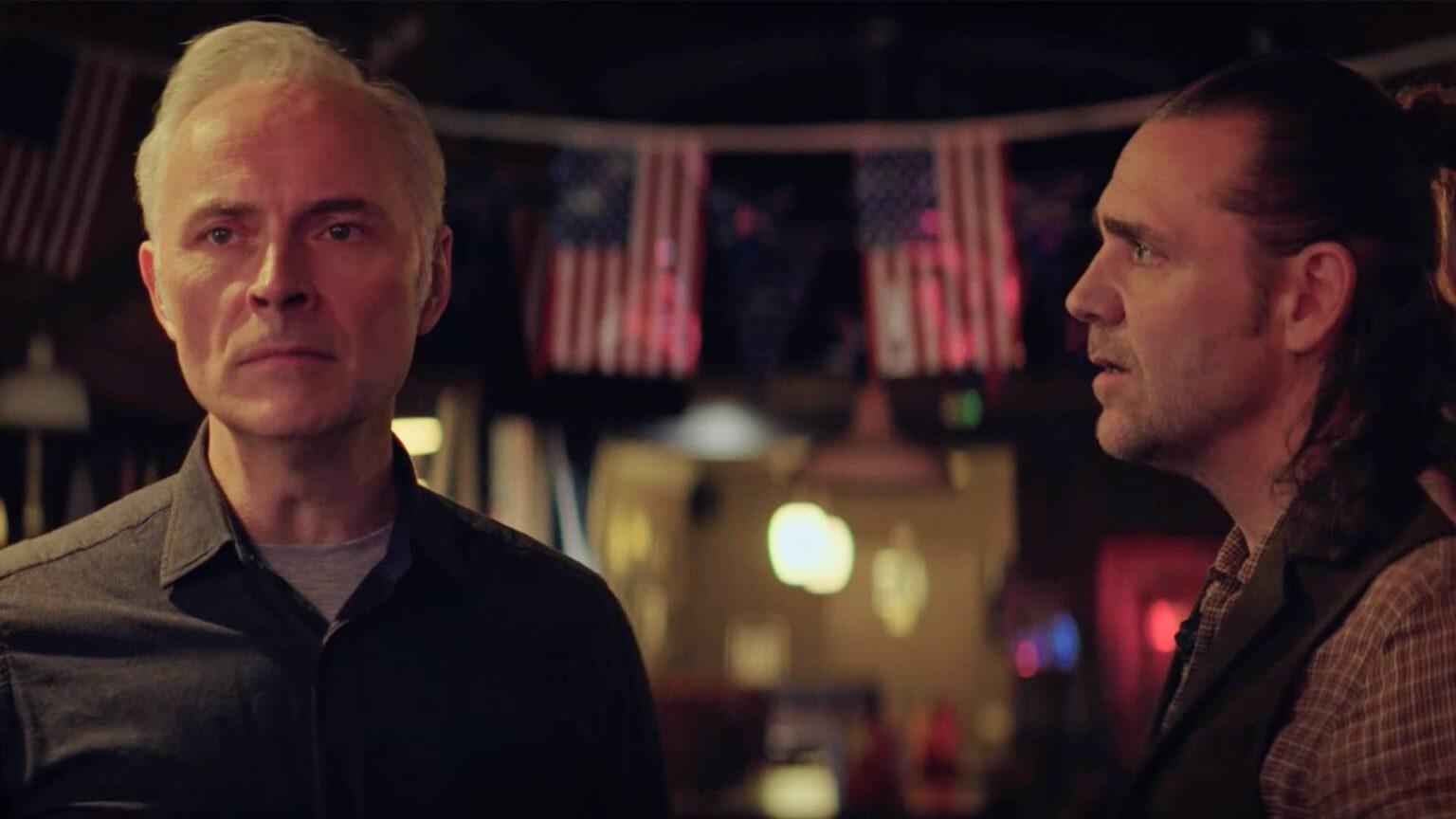
Produced and directed by award-winning filmmaker David Grubin (The Trials of J. Robert Oppenheimer, RFK, Truman, TR: The Story of Theodore Roosevelt, FDR) Abraham and Mary Lincoln: A House Divided weaves evocative original photography of battle scenes and White House dinners, cabinet meetings and shopping sprees with archival daguerreotypes and photographs to create a vibrant sense of America in the mid-nineteenth century. The film, narrated by David McCullough, also incorporates interviews with scholars and readings by actors David Morse (Abraham) and Holly Hunter (Mary).
Abraham Lincoln and Mary Todd shared, among other things, a love of politics. That Abraham was born into poverty and received less than a year of formal education didn't dampen his lofty ambitions. "Politics was his way of breaking out of that life that he didn't want to lead," says historian Doris Kearns Goodwin. "It was the road for a young man to become something in life that other people would respect and understand."
Mary grew up in luxury and stayed in school longer than most girls of the period. The popular and oft-courted young woman knew what she wanted in a husband. She told her sister that she planned one day to be the "wife of a president." Unfortunately, they also had in common a firsthand knowledge of the devastating power of grief. Both lost their mothers at early ages, and the deaths hit Mary and Abraham hard. "He never got over the loss," Grubin and Ward write. "For the rest of his life, Abraham would struggle with depression." Mary, according to one friend, "was a girl of much vivacity and conversation, but was subject to spells of mental depression."
Their differences were as notable as their similarities. "She's sensual, she's talking, really the center of attention," notes Goodwin about the dance at which the two met, "and here he is, the gangly character, awkward around women. She's five feet tall, he's six feet four, a most unlikely physical couple."
After a turbulent courtship, they married in 1842. Abraham and Mary became partners in his career. "They worked as a team politically," notes biographer David Herbert Donald. "She wrote letters for him. She gave parties for his political friends. She did the very best that she could to support him." Yet the more successful he became, the more stress they had in their marriage. That Lincoln ever reached the White House is somewhat astonishing. He had lost every election he had entered except one, and then had served only one term in the House of Representatives. He didn't attend the 1860 Republican Convention in Chicago, but having become well-respected within the party, sent able lieutenants to secure his nomination. The issue that split the party -- and indeed, the country -- was slavery.
Lincoln took the middle road, though he personally detested the "peculiar institution" of slavery. He didn't advocate abolition in the South, but was determined that slavery not spread any further. Slavery also divided the Democratic Party, which paved the way for a Lincoln victory. But they could not celebrate for long. Within 90 days, seven southern states would secede. Threats to kill Lincoln began arriving daily. His election had shattered the Union he held sacred and would let loose a whirlwind. With the Civil War consuming all of her husband's attention, Mary became more and more agitated. "He was gone every minute of every day," says Strozier, "and when he was there he wasn't there, because he was trying to run a war. She felt alone and abandoned."
Those feelings intensified when their son Willie contracted typhoid. They had already lost one son, Eddie, a decade before, and the tragedy had shattered her. In 1862 11-year-old Willie died. Mary collapsed, but Abraham, though devastated by the loss of his favorite son, was forced to stay strong. "As the war went on," write Ward and Grubin, "Mary would retreat more and more into herself." What little reserves Lincoln had left he bestowed upon his increasingly fragile wife.
Lincoln's assassination in 1865 left the nation in shock. "I don't think there's ever been such an outpouring of emotion in American history," says historian David E. Long. "Lincoln is shot within days after Lee's surrender. Victory is had and the man who represents everything that that victory symbolizes is struck down." His death was nearly too much for Mary to bear. "She couldn't even speak," notes biographer Linda Levitt Turner. "She couldn't even communicate. There was no getting close to her grief." Six years later, her son Tad, who had become her constant companion, died of tuberculosis. Mary had lost virtually everyone she ever cared for: her mother, three of her sons, and her husband. Finally, she snapped.
In her 17 remaining years, she moved from town to town and was briefly institutionalized. At the age of 64, Mary Todd Lincoln died of a stroke. She was a distant memory in the minds of most Americans and would largely be forgotten by history, while her husband attained the mythic status of martyr.
Array
(
[area] => pressReleases
[action] => details
[id] => ODc3
)
Array ( )