| Website: | Click to view |
| Length: | 1 hour, 30 minutes. |
| Released: | July 11th, 2001 |
| Available in: | VHS |
The vast open landscape of Utah's West Desert has become a crossroads for a national energy, safety and accountability debate.
The small Skull Valley Band of the Goshute Indian tribe, already surrounded by military, chemical and radiation hazards, is poised to welcome more than 80 million pounds of the nation's high-level nuclear waste to their traditional homeland. If their partnership with a consortium of nuclear power utilities gains federal approval, the Skull Valley reservation lands will store 40,000 metric tons of spent uranium fuel rods from the nation's nuclear power plants for up to 40 years. The above-ground, open-air storage plan has moved forward despite the opposition of Utah's Governor, state legislature, congressional delegation and public sentiment.
The result is a full-blown power struggle: a small, forgotten Native American tribe's sovereignty in direct conflict with a state's determination to block potentially lethal spent nuclear rods from storage within its borders. Large public utilities facing an energy crisis drive forward with plans to move nuclear waste from power plants across the country to the barren deserts of the West. The federal government's promise to manage nuclear waste comes in sharp conflict with a state's ability to control its own destiny. And at the center of the controversy is arguably the most lethal industrial waste ever produced by humankind.
In the first balanced, in-depth examination of the proposal to temporarily store nuclear waste on the reservation lands of the Skull Valley Band of the Goshute Indian tribe, KUED Senior Producer Ken Verdoia details the cultural, political, economic and environmental conflicts that make this one of the most compelling public policy crises of the new century. In a special 90-minute documentary designed to educate Utahns on a largely misunderstood and complex public process, KUED presents "Skull Valley: Radioactive Waste and the American West." The documentary's July 2001 premiere came just prior to release of the U.S. Nuclear Regulatory Commission's final Environmental Impact Statement on the plan. Public hearings will be held in Utah later this year as a precursor to a final decision on the project in the spring of 2002. The companion Web site will be continually updated throughout the process to serve as the most informative, all-encompassing pubic information resource on the topic to date.
Skull Valley takes the viewer to the little known locations and introduces the players that will shape the future of nuclear waste storage and the American West:
Perhaps more volatile than the lines drawn between the tribe and the government - and between the tribe members themselves -- are the divisions between the government and the utility companies.
Meet Private Fuel Storage, L.L.C. (PFS), a consortium of eight nuclear power utilities which has decided to take nuclear waste storage out of the hands of an indecisive federal government and into their own. Pending federal approval of the plan, PFS will remove spent uranium fuel rods from nuclear power plants coast-to-coast, place them on specially designed rail cars, and ship them to Skull Valley. If the PFS plan fulfills its promise, the Skull Valley reservation would house the first, private, high-level radioactive storage site in the nation's history.
Throw in several competing interests including:
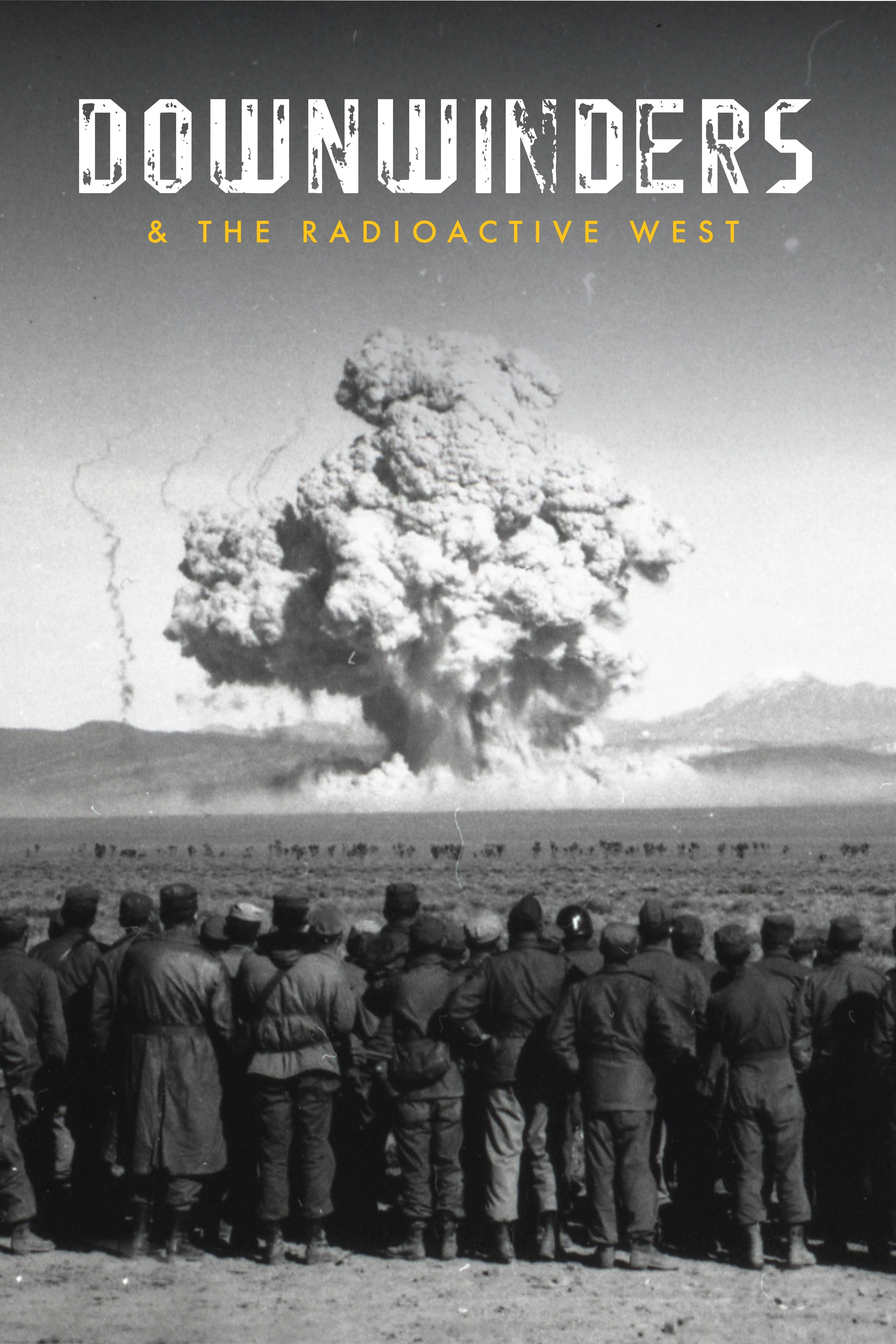
In addition to the interviews, the program contains archival footage and photos that demonstrate the evolution of Utah's West Desert into one of the most embattled, if not toxic, areas of the United States. The program also depicts what the final storage site will look like, as it sprawls across the equivalent of seven side-by-side football fields. Skull Valley will also feature maps of key sites and activities, including: the major transportation routes for the waste, on its way into Skull Valley; the West Desert, where several military projects already exist; and the nation's nuclear reactor sites, where the waste will begin its journey to Utah.
Verdoia puts the complex struggle into context, showing how the federal government's promise, yet failure, to develop a clear policy for dealing with nuclear waste has led to the current situation. "'Skull Valley' affords an opportunity to explore numerous critical issues confronting the nation at the dawn of a new century," says multiple Emmy Award-winning producer of the documentary. "It offers an often shocking depiction of a breakdown in the nation's system of checks and balances. A breakdown with serious repercussions for every Utah citizen."
Following the documentary, KUED has aired a 30-minute, citizen speak-out edition of "Civic Dialogue" to discuss the issue with panelists and a small audience made up of opponents, proponents, participants in the program, and unaligned, average citizens.
Funding for Skull Valley was generously provided by the Lawrence T. and Janet T. Dee Foundation and Norman and Barbara Tanner.
Array
(
[area] => productions
[action] => details
[id] => 83
)
Array ( )